Empire Engineers: Incan Ingenuity & Ecological Wisdom
Empire Engineers: PERU
WITH EDUCATORS
Led by Jennifer Douglas & Rodrigo Del Castillo
TUITION:
$1,800 ($500 non-refundable deposit)
AGE GROUP:
• 8–12 years old
PERFECT FOR:
Empire Engineers is designed for curious, creative learners ages 8–12 who love asking big questions, building things with their hands, exploring outdoors, making connections across subjects, and learning through authentic experiences rather than textbooks.
With a maximum of just 12 students, this small-group adventure provides individualized support while fostering meaningful friendships and collaborative learning.
Whether your child is fascinated by history, engineering, science, archaeology, art, languages, nature, or simply loves exploring new places, this interdisciplinary adventure offers countless opportunities to discover, create, and grow.
-
How did the Inca engineer thriving communities in harmony with the Andean landscape?
This question becomes our guide as students spend five unforgettable weeks exploring Peru's spectacular Sacred Valley through the eyes of engineers, historians, scientists, artists, architects, and explorers.
Rather than simply learning about the Inca, students investigate their remarkable achievements firsthand. Ancient cities, soaring mountain terraces, bustling markets, weaving villages, rivers, and archaeological sites become living classrooms where every excursion inspires new questions and every classroom investigation prepares students for their next adventure.
Each week follows WorldWise's signature rhythm of two classroom days and two field-learning days, allowing students to build background knowledge before applying it through authentic experiences across the Sacred Valley.
Alongside lead teachers Jennifer Douglas and Rodrigo Del Castillo, students explore how engineering, ecology, astronomy, agriculture, mathematics, architecture, language, and culture combined to create one of history's most extraordinary civilizations.
Students receive two hours of formal Spanish instruction each week with Rodrigo and approximately two hours of individualized mathematics tutorials each week with Jennifer and Rodrigo.
Throughout the five weeks, students create beautifully illustrated field journals inspired by Waldorf Main Lesson Books, combining scientific observations, engineering sketches, maps, botanical illustrations, Spanish vocabulary, watercolor paintings, diagrams, reflective writing and historical notes into a lasting record of their learning.
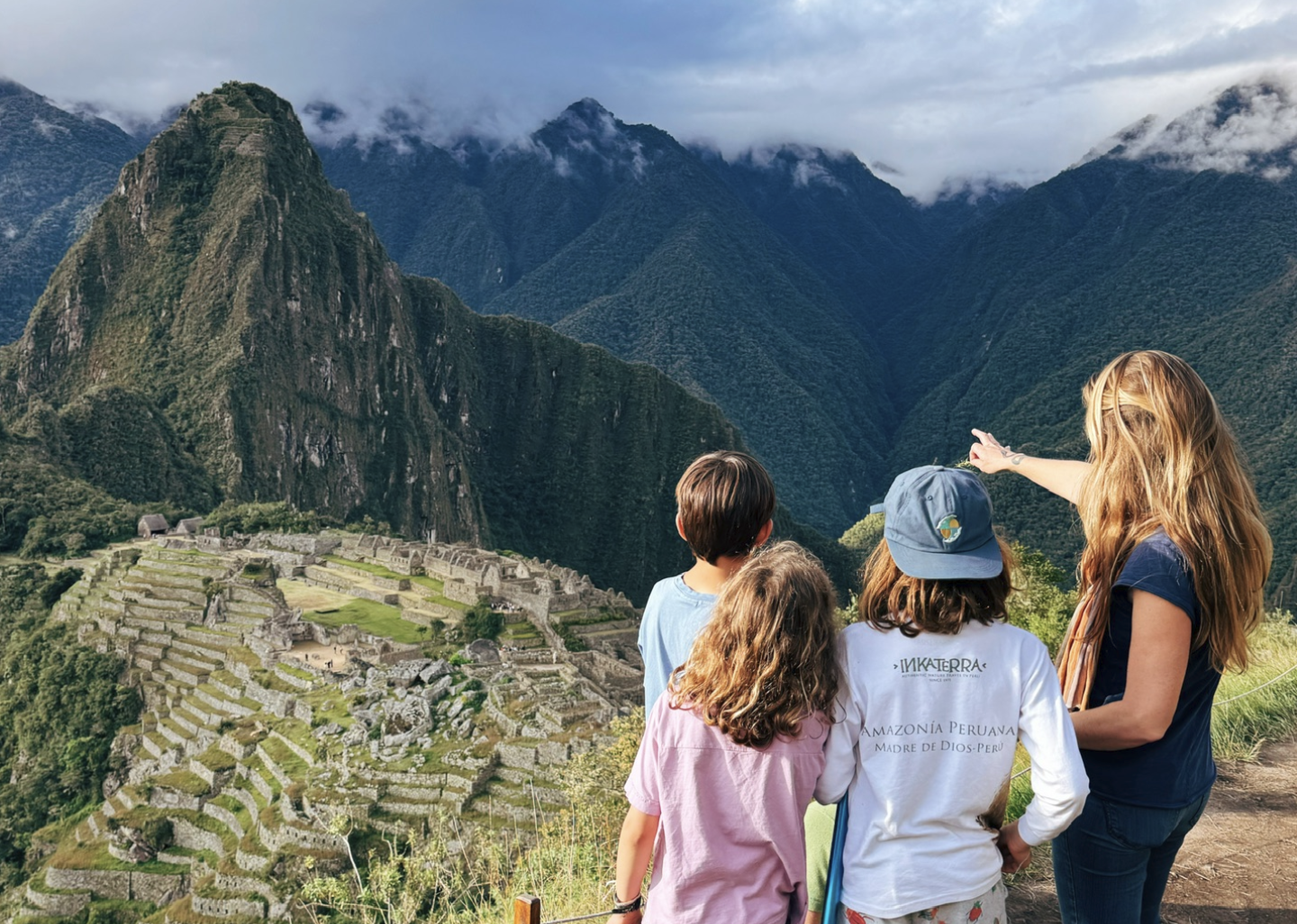
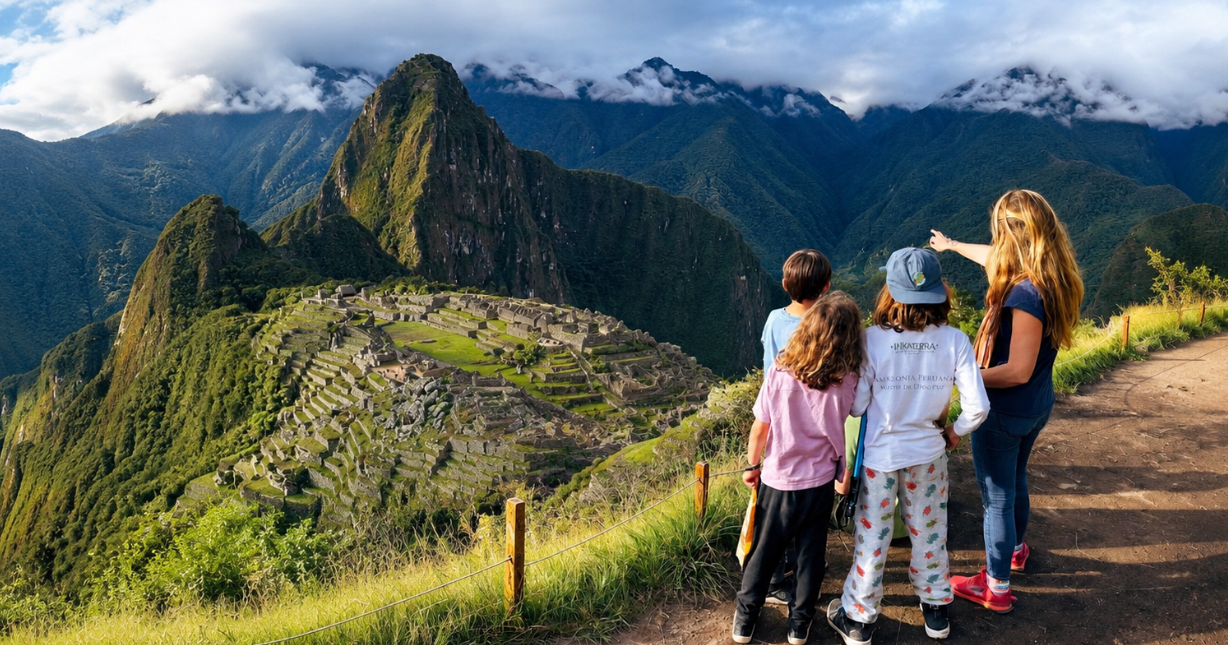
Families who wish to extend their adventure may also choose to join an optional guided weekend educational excursion to Machu Picchu, where students investigate one of the world's most remarkable examples of engineering, architecture, and landscape design.
ACADEMIC LEARNING OBJECTIVES
Our interdisciplinary curriculum draws on recognized academic standards, with learning adapted to students’ ages, abilities, and prior knowledge. The objectives below highlight the academic knowledge and skills students will develop throughout Empire Engineers.
SciencePhysical Science, Biology, Earth Science & Astronomy
- Investigate crystallization: Explain how evaporation and crystallization produce salt at the Maras salt ponds, and observe crystal formation through a hands-on salt or sugar crystallization experiment. (NGSS 5-PS1-1, supporting connection; 5-PS1-3, supporting connection)
- Understand Earth’s seasons: Use models to explain how Earth’s tilted axis and revolution around the Sun produce seasonal changes. (NGSS MS-ESS1-1, grade 6 extension)
- Explore Inca astronomy: Explain how the Inca observed the Sun and used architectural alignments to identify seasonal changes and important dates. (NGSS 5-ESS1-2, supporting connection; C3 D2.His.2.3-5, supporting connection)
- Investigate agricultural science: Explain how elevation, temperature, sunlight, water, and soil influence plant growth, using Andean agricultural terraces and Moray as examples. (NGSS 5-ESS2-1, supporting connection)
- Study hummingbird adaptations: Observe and compare hummingbird species, identifying how their physical structures and behaviors support feeding, movement, and survival. (NGSS 4-LS1-1, supporting connection)
- Explore ethnobotany: Identify plants traditionally used by Andean communities, describe their characteristics, and explain how traditional botanical knowledge is developed and passed between generations. (C3 D2.His.2.3-5, supporting connection; NGSS Science and Engineering Practice: Obtaining, Evaluating, and Communicating Information)
- Investigate traditional plant preparations: Learn how Andean communities prepare plant-based remedies, distinguishing traditional medicinal knowledge from scientifically established medical effects. (NGSS Science and Engineering Practice: Obtaining, Evaluating, and Communicating Information)
Engineering & TechnologyArchitecture, Agricultural Engineering & Design
- Analyze Inca engineering: Explain how Inca builders adapted stonework, roads, terraces, and irrigation systems to the challenges of the Andean landscape. (C3 D2.Geo.4.3-5)
- Investigate structural design: Identify features of Inca architecture, including fitted stonework and trapezoidal openings, and explain how these contribute to structural stability. (NGSS Science and Engineering Practice: Developing and Using Models, supporting connection)
- Understand water management: Explain how agricultural terraces and irrigation systems helped control water and support food production in mountainous environments. (C3 D2.Geo.4.3-5)
- Apply engineering design: Plan and construct historically informed village structures, considering their purposes, placement, materials, and relationships to surrounding infrastructure. (NGSS 3-5-ETS1-1, supporting connection; CCSS MP4)
- Evaluate design decisions: Use historical evidence, scientific understanding, measurement, and peer feedback to explain and refine the design of a collaborative village model. (CCSS MP3, MP4; NGSS Science and Engineering Practice: Constructing Explanations and Designing Solutions)
HistoryInca Civilization & Andean Cultural History
- Trace the development of the Inca Empire: Describe the origins, expansion, leadership, and organization of the Inca civilization. (C3 D2.His.1.3-5)
- Understand daily life: Explain how agriculture, animal husbandry, textile production, community labor, and resource distribution supported Inca society. (C3 D2.His.2.3-5)
- Investigate government and communication: Describe how roads, messengers, administrative centers, and quipu recordkeeping helped govern a vast empire. (C3 D2.His.2.3-5)
- Examine the Spanish conquest: Identify important events associated with the Spanish conquest and explain its consequences for Indigenous Andean communities. (C3 D2.His.14.3-5)
- Interpret historical evidence: Use archaeological sites, artifacts, and historical accounts to draw conclusions about Inca civilization. (C3 D2.His.9.3-5; D2.His.10.3-5, supporting connection)
- Explore spiritual traditions: Describe the importance of the Sun, mountains, nature, and ceremony in Inca beliefs and cultural practices. (C3 D2.His.2.3-5)
- Understand cultural continuity: Explain how contemporary Indigenous Andean communities preserve, adapt, and continue traditions connected to their historical heritage. (C3 D2.His.2.3-5)
GeographyPeru & South America
- Develop mapping skills: Locate Peru and neighboring South American countries, identify major physical features, and use map conventions to communicate geographical information. (C3 D2.Geo.1.3-5, if constructing maps; D2.Geo.3.3-5)
- Compare Peru’s natural regions: Identify and describe the coastal desert (costa), Andean highlands (sierra), and Amazon rainforest (selva), comparing their climates, landscapes, and ecosystems. (C3 D2.Geo.2.3-5; D2.Geo.3.3-5)
- Analyze human-environment relationships: Explain how the geography of the Andes influenced Inca agriculture, settlement patterns, transportation, and communication. (C3 D2.Geo.4.3-5; D2.Geo.8.3-5)
MathematicsIndividualized Mathematics & Applied Mathematics
- Progress at an individual pace: Develop mathematical understanding, accuracy, and fluency through individualized instruction adapted to each student’s current level, learning needs, and pace. (CCSS Mathematics: Individualized grade-level content standards)
- Strengthen mathematical reasoning: Solve problems, explain strategies, check solutions, and apply mathematical understanding to unfamiliar challenges. (CCSS MP1, MP3)
- Investigate architectural proportions: Measure and compare Inca windows, doorways, and other architectural features, using ratios, geometry, and proportional reasoning appropriate to each student’s level. (CCSS MP4, MP5; 6.RP.A.1, extension)
- Explore Inca numerical systems: Explain how quipu represented numerical information using knots and decimal place value. Construct a personal quipu encoding their birthdate and demonstrate how to interpret it. (CCSS 4.NBT.A.1, supporting connection; MP4)
- Apply mathematics to construction: Use measurement, geometry, spatial reasoning, and scale to plan and construct features of a collaborative village model. (CCSS MP4, MP5; 3.G.A.1, supporting connection)
English Language ArtsReading, Writing, Speaking & Listening
- Read informational texts: Identify main ideas, important details, and relevant evidence in age-appropriate historical and scientific texts. (CCSS RI.3.2; RI.4.2; RI.5.2)
- Explain learning in their own words: Use accurate vocabulary and information gathered through reading, observation, and instruction to communicate historical and scientific understanding. (CCSS SL.3.4; SL.4.4; SL.5.4)
- Develop field-journaling skills: Record observations, measurements, diagrams, questions, and written reflections to organize and document learning. (CCSS W.3.8; W.4.8; W.5.8, supporting connection)
- Write informative explanations: Compose clear, organized descriptions of Inca technologies and village structures, explaining their purposes and supporting design decisions with relevant information. (CCSS W.3.2; W.4.2; W.5.2)
- Develop public-speaking skills: Prepare and deliver an individual oral presentation to an audience of parents, using the collaborative Living Inca Village model as a visual aid. Practice organizing ideas, speaking clearly, explaining evidence, and answering questions. (CCSS SL.3.4; SL.4.4; SL.5.4; SL.6.4, extension; SL.4.5; SL.5.5)
Visual ArtsScientific Illustration, Textiles & Model Making
- Develop observational drawing skills: Create detailed watercolor illustrations of hummingbirds, accurately representing their shapes, colors, and distinctive anatomical features. (NCAS VA:Cn10.1.3.a; VA:Cr2.1.4.a)
- Investigate natural dyes: Explore how pigments are extracted from natural materials and apply traditional Andean dye-making techniques. (NCAS VA:Cr2.1.4.a)
- Learn traditional weaving: Use a backstrap loom to practice weaving techniques and create an original textile. (NCAS VA:Cr2.1.4.a)
- Explore textile patterns: Identify and create geometric patterns, exploring symmetry, repetition, color, and the cultural meanings associated with Andean textile designs. (NCAS VA:Cn11.1.4.a; VA:Cr2.1.4.a)
- Apply artistic design skills: Use proportion, texture, color, and three-dimensional construction techniques to create historically informed architectural and environmental models. (NCAS VA:Cr2.3.4.a; VA:Cr2.1.4.a)
- Evaluate and refine artwork: Improve artistic work through observation, practice, feedback, and attention to detail. (NCAS VA:Cr3.1.4.a)
MusicTraditional Andean Instruments & Cultural Understanding
- Understand musical instruments: Identify traditional Andean instruments and explain how their materials, shapes, and construction produce different sounds. (NCAS Music Responding, Anchor Standard 7, supporting connection)
- Understand music in cultural context: Explain how music contributes to Andean ceremonies, celebrations, and community traditions. (NCAS Music Connecting, Anchor Standard 11)
SpanishBeginner Spanish Language
- Communicate with confidence: Practice basic greetings, introductions, and polite expressions in Spanish. (ACTFL Novice: Interpersonal Communication)
- Build everyday conversation skills: Ask and answer simple questions about names, ages, preferences, and familiar activities using practiced words and phrases. (ACTFL Novice: Interpersonal Communication)
- Develop listening skills: Recognize familiar words and simple expressions in clear spoken Spanish, supported by gestures and context. (ACTFL Novice: Interpretive Communication)
- Use Spanish in everyday life: Practice simple expressions during authentic interactions, such as greeting local guides, ordering food, or asking basic questions. (ACTFL Novice: Interpersonal Communication)
- Develop relevant vocabulary: Identify and use beginner Spanish words related to familiar places, foods, objects, and activities. (ACTFL Novice: Interpretive and Presentational Communication)
Individual progress depends on prior language experience.
Academic Standards Note
WorldWise curriculum draws on recognized educational frameworks, including the Next Generation Science Standards (NGSS), Common Core State Standards (CCSS), C3 Framework for Social Studies, National Core Arts Standards (NCAS), and ACTFL language proficiency benchmarks.
Learning objectives are adapted to students’ ages, abilities, and prior knowledge. Standards references identify relevant academic expectations and supporting connections rather than guaranteeing mastery of every component of a standard.
-
🏔 Optional Weekend Add-On — Machu Picchu — Families may choose to extend their Sacred Valley experience with a guided educational weekend exploring one of the world's greatest engineering achievements. Together we'll investigate remarkable stone architecture, gravity-fed water systems, agricultural terraces, solar alignments, and the ingenious ways the Inca designed a thriving city in harmony with the surrounding mountains.
Pisac Archaeological Park – Discover spectacular mountain terraces, temples and agricultural systems.
Ollantaytambo – Investigate remarkable stone masonry, urban planning and create a traditional quipu.
Maras Salt Ponds – Learn how salt has been harvested for centuries while exploring geology and evaporation.
Moray Agricultural Laboratories – Explore Incan agricultural experimentation and mountain microclimates.
Traditional Weaving Centres – Learn traditional weaving techniques, natural dyes and symbolic patterns while creating your own woven work.
Amaru Community – Discover ethnobotany and medicinal plants through local knowledge keepers.
TAKINUNA Museum – Explore a private collection of pre-Columbian and Incan instruments.
Traditional Ceramics Workshop – Create ceramic tiles inspired by Incan symbolism.
Urubamba Produce Market – Practice Spanish while exploring the extraordinary agricultural diversity of the Sacred Valley.
Hummingbird Garden – Study pollination, biodiversity and ecological relationships.
-
Students collaboratively design and construct a Living Incan Village Model demonstrating their understanding of agriculture, water engineering, architecture, astronomy, medicinal plants, textiles, quipu communication, music and ecological stewardship.
Families are invited to a final Celebration of Learning where students share both their model and the journey documented throughout their Waldorf-inspired field journals.
-
Five-week immersive learning adventure
Maximum of 12 students
Two classroom days & two field-learning days each week
Jennifer Douglas – Lead Teacher (Multidisciplinary Learning)
Rodrigo Del Castillo – Lead Teacher (History, Spanish & Local Culture)
2 hours/week formal Spanish instruction
Approximately 2 hours/week individualized math tutorials
Transportation on scheduled Tuesday & Thursday field-learning days
Student entry fees for scheduled activities
Curriculum materials
Personal field journal
Final showcase
-
International airfare
Accommodation
Meals and snacks
Travel & medical insurance
Transportation other than scheduled Tuesday/Thursday field-learning days
Adult excursion fees where applicable
Optional Machu Picchu Educational Weekend
Interested in joining this adventure? Select ‘Enquire Now’ to complete our Family Questionnaire. We’ll review your inquiry and follow up with information about availability and next steps.
CONTINUE YOUR ADVENTURE (Optional Extension)
Many families choose to extend their time in Peru before or after Empire Engineers. We are delighted to offer optional educational extension that complement the core program.
🏔 Machu Picchu Educational Weekend (Optional)
Join Jennifer and Rodrigo for a guided weekend exploring the iconic UNESCO World Heritage Site of Machu Picchu. More than simply sightseeing, this educational experience brings our driving question to life as students investigate one of history's greatest feats of engineering while deepening their understanding of Incan architecture, astronomy, water management, and mountain design.
Perfect for families who would like to experience Machu Picchu together while benefiting from the educational expertise of the WorldWise team.
FAQs ABOUT THE EMPIRE ENGINEERS LEARNING ADVENTURE
-
Empire Engineers is designed for curious learners ages 8–12 who love hands-on discovery, big questions, and exploring across subjects. With a maximum of 12 students, it suits children who thrive in small, collaborative groups and learn best through real experiences rather than textbooks.
-
Families arrange their own accommodation in the Sacred Valley, ideally in or near Urubamba to stay close to the daily classroom and field-learning locations. We're happy to share suggested areas and family-friendly options once you enrol.
-
Families arrange their own local travel to and from the daily meeting point. On scheduled Tuesday and Thursday field-learning days, WorldWise provides group transportation to and from excursion sites.
-
Transportation is included on scheduled Tuesday and Thursday field-learning days. Daily travel to the classroom and any other transportation is arranged by families. Transportation for the optional Machu Picchu weekend is arranged separately as part of that add-on.
-
The program runs four days a week over five weeks, following WorldWise's rhythm of two classroom days and two field-learning days, with formal Spanish instruction and individualized math tutorials built into the week.
-
Machu Picchu is not part of the core five-week program. It is offered as an optional guided educational weekend add-on. Families who wish to visit together can join Jennifer and Rodrigo to investigate its architecture, water systems, terraces and astronomical alignments firsthand.
-
Students bring day-to-day essentials for outdoor field days — comfortable walking shoes, sun protection, water, and weather-appropriate layers. A full packing list is shared with enrolled families before the program begins.
-
Field-learning days are designed for the students and their educators. Where a site allows adult participation, parents may join for an additional excursion fee. Details are confirmed closer to each excursion.
We have answered the most commonly asked questions about our Learning Adventures. You can take a look at them here.