Welcome to Perspective Pioneers, an academically rigorous, place-based learning adventure set in Lisbon, Portugal.
PERSPECTIVE PIONEERS: LISBON, PORTUGAL
WITH EDUCATOR
TUITION:
Coming Soon
AGE GROUP:
• 12–16 years old
PERFECT FOR:
The program is designed for students ages 12–16 who demonstrate academic readiness, intellectual curiosity, motivation, and enthusiasm for challenging learning.
-
What makes a city unique? Why do neighborhoods change? How do migration, culture, history, and economics shape the places we live? And how can a city preserve its identity while adapting to the needs of a changing world?
Welcome to Perspective Pioneers, an academically rigorous, place-based learning adventure set in Lisbon, Portugal.
Over five weeks of guided instruction and an additional week of independent research, students will undertake an in-depth study of Unit 6 of the College Board's AP Human Geography curriculum: Cities and Urban Land-Use Patterns and Processes. Selected concepts from other AP Human Geography units, particularly cultural geography and geographical foundations, will support and enrich their investigations.
Unlike a typical WorldWise adventure, Perspective Pioneers places a particularly strong emphasis on advanced academic study, critical reading, geographical research, analytical writing, and evidence-based argumentation. Designed for academically ready students ages 12–16, the program introduces college-level geographical concepts through challenging but accessible instruction, collaborative inquiry, and authentic fieldwork.
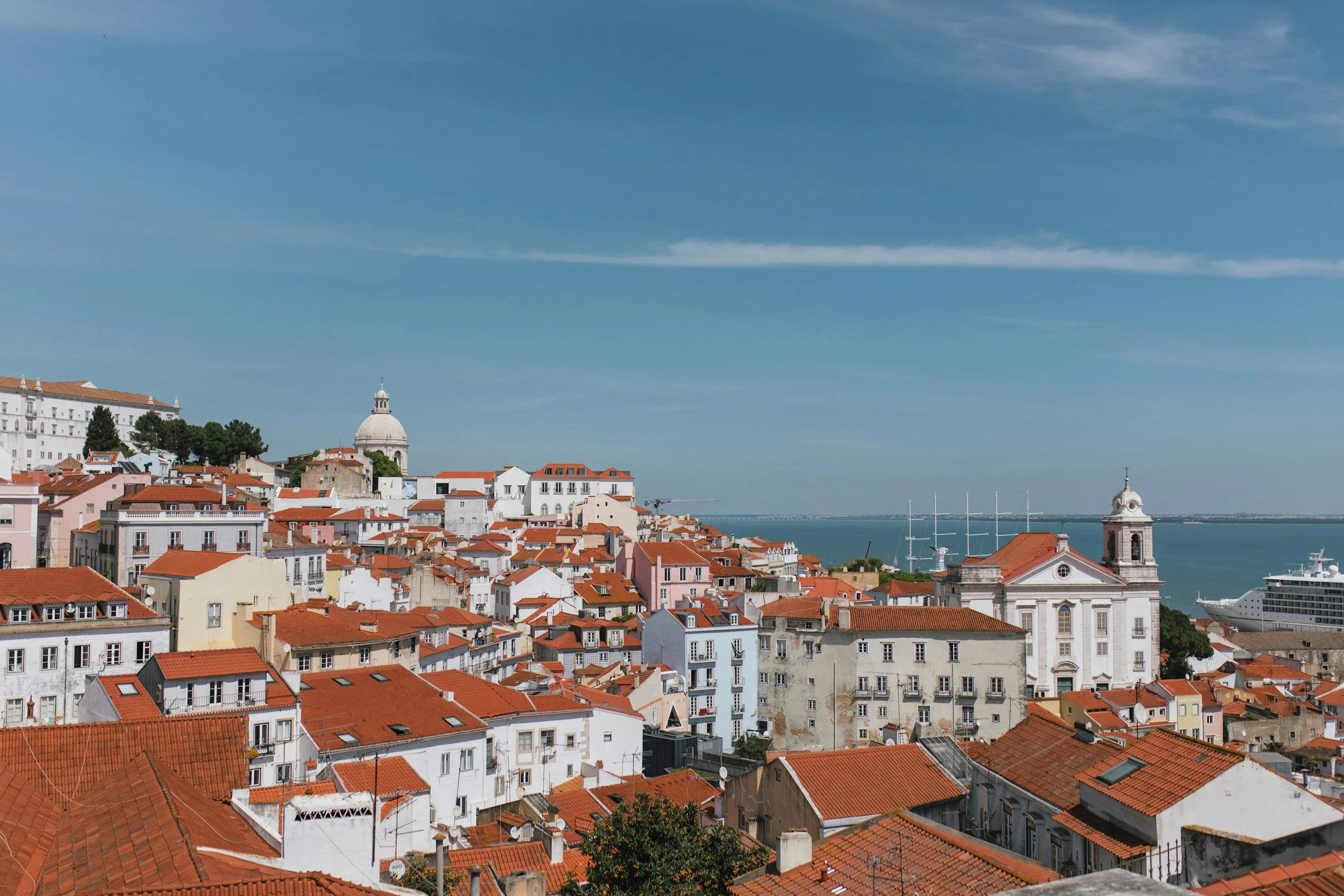
Lisbon will serve as our living laboratory. Students will examine how cities develop and change, investigate patterns of land use and urbanization, explore the effects of tourism and housing pressures, and evaluate approaches to sustainable urban planning. Along the way, they will investigate how migration, cultural diffusion, globalization, and historical events have shaped Lisbon's distinctive urban landscape.
Rather than simply studying geographical theories in textbooks, students will put them to work. They will create maps, interpret demographic and spatial data, investigate historical sources, conduct neighborhood field surveys, develop geographical arguments, and collaborate on research projects.
Throughout the program, students will be encouraged to question assumptions, consider multiple perspectives, and distinguish between observation, inference, and evidence-supported conclusions.
Our central inquiry will guide the adventure:
How do people shape places, how do places shape people, and how can Lisbon evolve while preserving its cultural identity?
ACADEMIC LEARNING OBJECTIVES
Real-world adventures. Meaningful academic learning.
AP Human Geography: Unit 6Cities and Urban Land-Use Patterns and Processes
Students will engage in an in-depth study of Unit 6 of the AP Human Geography curriculum, supported by selected concepts from other units.
Students will:
- Analyze patterns of urbanization, city development, and the spatial organization of urban areas.
- Investigate the historical, economic, cultural, and geographical factors influencing urban growth.
- Interpret urban land-use models and evaluate their applicability to Lisbon and other cities.
- Analyze how population density, transportation networks, economic activity, and land values influence urban landscapes.
- Investigate urban challenges, including housing affordability, tourism pressures, gentrification, and spatial inequality.
- Evaluate approaches to sustainable urban development, accessibility, and urban planning.
- Apply geographical theories and concepts to original field investigations and real-world urban challenges.
Supporting Human Geography Concepts
Selected concepts from other AP Human Geography units will deepen students’ understanding of Lisbon and its global connections.
Students will:
- Interpret and create thematic maps and analyze spatial relationships at different geographical scales.
- Explain how migration, cultural diffusion, and globalization influence cultural landscapes.
- Investigate how historical trade, colonialism, language, and cultural exchange have shaped Lisbon.
- Evaluate relationships between cultural identity, urban change, and geographical processes.
Geographical Research, Data Analysis, and Communication
Students will:
- Develop meaningful geographical research questions and investigate them using appropriate research methods.
- Collect and analyze original fieldwork data.
- Interpret maps, demographic information, graphs, and geographical datasets.
- Evaluate sources, research limitations, and competing explanations.
- Construct evidence-based geographical arguments using accurate academic terminology.
- Communicate findings through analytical writing, maps, research reports, and presentations.
MathematicsIndividualized Learning
One hour of individualized mathematics instruction on each scheduled classroom day (Monday, Tuesday, Thursday, and Friday), up to four hours per full instructional week.
As with other WorldWise programs, mathematics instruction will be tailored to each student’s current level, strengths, and areas for development.
Students will work on appropriate mathematical concepts and skills through individualized instruction, guided practice, and problem-solving.
Mathematics will be taught separately from the AP Human Geography curriculum, allowing students to continue progressing in their own mathematical learning while participating in the shared geographical investigations.
AP® and Advanced Placement® are registered trademarks of the College Board. This program explores AP Human Geography Unit 6 in depth, with selected supporting concepts from other units, but is not a complete AP course and does not independently award AP credit.
-
Perspective Pioneers runs from March 1 through April 7, 2027, including one independent research week.
Monday, Tuesday, and Thursday | 9:00 AM – 3:00 PM
One hour of individualized mathematics instruction.
AP Human Geography seminars and lessons.
Geographical research, mapping, and data analysis.
Analytical writing and collaborative projects.
Wednesday | 9:00 AM – 3:00 PM
Guided geographical field investigations throughout Lisbon.
Original data collection, mapping, and place-based learning.
No scheduled mathematics instruction.
Friday | 9:00 AM – 12:00 PM
One hour of individualized mathematics instruction.
Research workshops, reflection, analytical writing, and project presentations.
Independent Research Week: March 8–12
There will be no teacher-led classes, field excursions, or mathematics tutorials during this week.
Students will instead collaborate in pairs or groups of three on a structured geographical research project requiring approximately 60–90 minutes of independent work per day.
Detailed instructions, research resources, and assessment criteria will be provided in advance. Students will present their findings when regular classes resume on March 15.
No scheduled classes are anticipated on Good Friday, March 26.
-
Students will work collaboratively to investigate a real challenge facing Lisbon, such as housing affordability, tourism, transportation, accessibility, or sustainable urban development. Drawing on geographical research, field observations, and data analysis, they will develop evidence-based proposals for Lisbon's future, considering different community perspectives and the trade-offs involved in urban planning. Students will present their findings and recommendations to families at our final exhibition on April 7.
-
An academically rigorous, small-group educational program designed and taught by US-credentialed educator Lisé Whitfield.
In-depth instruction in Unit 6 of AP Human Geography: Cities and Urban Land-Use Patterns and Processes, supported by selected concepts from other units.
One hour of individualized mathematics instruction on each scheduled classroom day (Monday, Tuesday, Thursday, and Friday), up to four hours per full instructional week.
Classroom-based instruction in geographical research, mapping, data analysis, analytical writing, and critical thinking.
One substantial guided geographical field excursion per instructional week, except during the final exhibition week.
Structured independent geographical research materials and assignments for March 8–12.
Collaborative research projects and urban planning investigations.
Standard classroom materials, research resources, and geographical field journals.
Development of an individual academic portfolio.
Preparation and presentation of the final Lisbon 2050 project.
Final student exhibition and celebration of learning.
Program coordination and ongoing communication with families.
-
Accommodation in Lisbon
Travel to and from Portugal
Airport transfers and transportation to/from our classroom
Meals and snacks
Personal expenses
Travel and medical insurance
Parent supervision and activities during the independent research week (March 8–12)
Any optional activities outside the scheduled program
Perspective Pioneers is a private, invitation-based program for academically ready students ages 12–16.
Interested in joining this adventure? Select ‘Enquire About This Program’ to complete our Family Questionnaire. We’ll review your inquiry and follow up with information about availability and next steps.
FAQs ABOUT THE PERSPECTIVE PIONEERS LEARNING ADVENTURE
-
No. Students will undertake an in-depth study of Unit 6, Cities and Urban Land-Use Patterns and Processes, supported by selected concepts from other AP Human Geography units.
The program provides substantial exposure to advanced geographical concepts and research skills but does not cover the full AP Human Geography curriculum or independently award AP course credit.
-
Yes! One hour of individualized mathematics instruction on each scheduled classroom day (Monday, Tuesday, Thursday, and Friday), up to four hours per full instructional week.
Mathematics instruction will be tailored to each student's individual learning needs and academic level, as in other WorldWise programs.
There will be no mathematics instruction on Wednesdays, during the independent research week of March 8–12, or on Good Friday, March 26.
-
Perspective Pioneers is intentionally more academically rigorous than a typical WorldWise adventure.
Students will engage with advanced geographical theories, interpret data, conduct research, develop analytical writing skills, and construct evidence-based arguments.
The program is designed for students ages 12–16 who demonstrate academic readiness, intellectual curiosity, motivation, and enthusiasm for challenging learning.
No prior AP Human Geography experience is required.
We have answered the most commonly asked questions about our Learning Adventures. You can take a look at them here.