Stage Scholars: Literature, Character & Storytelling Through Theatre
STAGE SCHOLARS: ENGLAND
WITH EDUCATOR
JUNIOR TEACHING ASSISTANT
COST PER STUDENT:
$2,950 ($650 non-refundable deposit)
AGE GROUP:
• 9–14 years old
PERFECT FOR:
Curious, creative students aged 9–14 who love stories, characters, performance, music, or the arts—and students who may not think they love analyzing literature yet! No previous acting or theatre experience is required.
-
What makes a character unforgettable? Why does a playwright give a character a particular line—or leave something important unsaid? Why does a scene happen exactly when it does? And how can the same words on a page become something entirely different in the hands of different actors, directors, and designers?
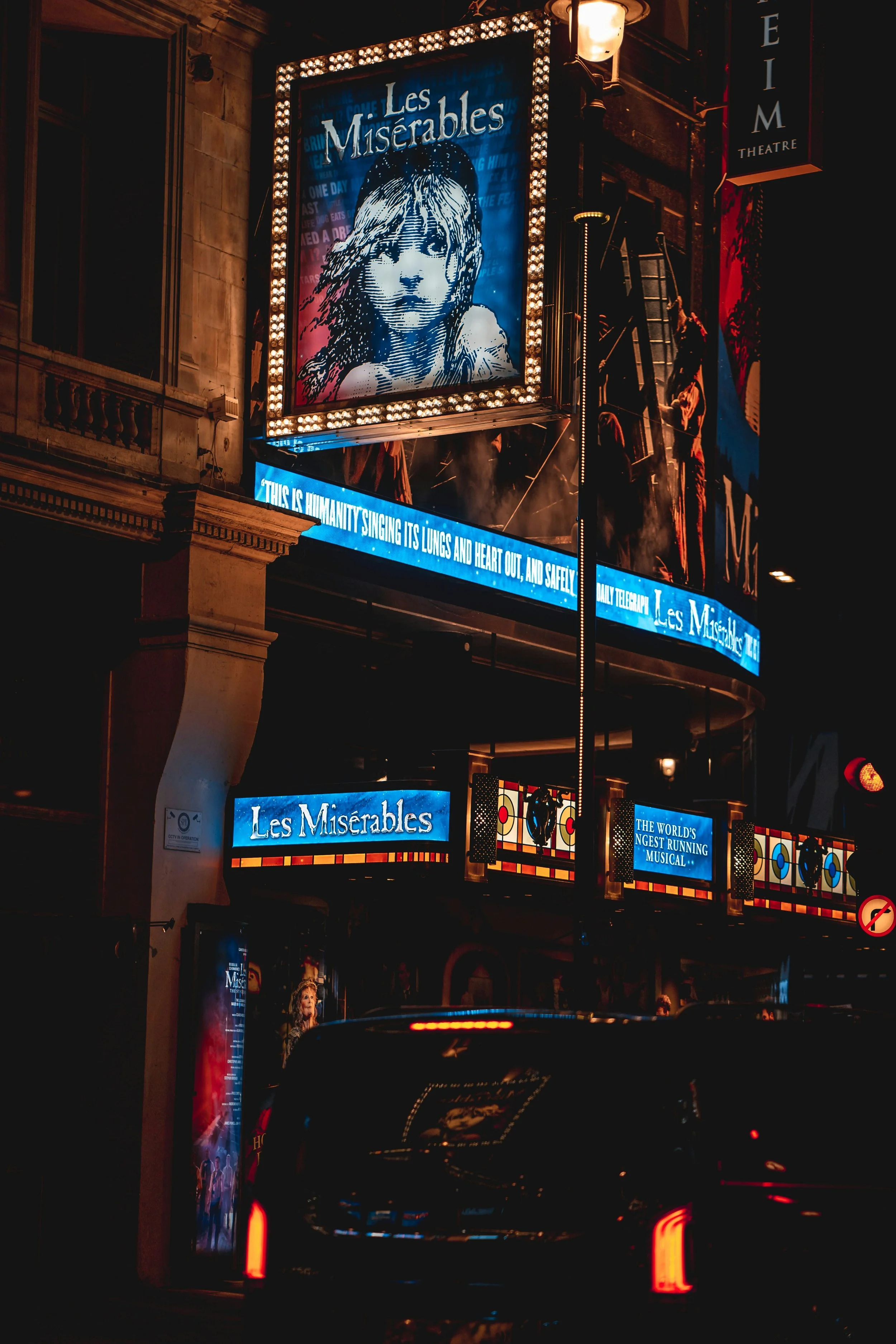
Stage Scholars is a five-week immersive academic exploration of literature through the living world of theatre—all based in London, one of the world’s great theatre cities. Students investigate character, conflict, motivation, subtext, theme, language, and dramatic structure through three theatrical lenses: Shakespeare, modern plays, and musical theatre.
Rather than approaching complex literature solely from behind a desk, students will read it, question it, discuss it, watch it performed, step inside its characters, and experiment with bringing it to life themselves.
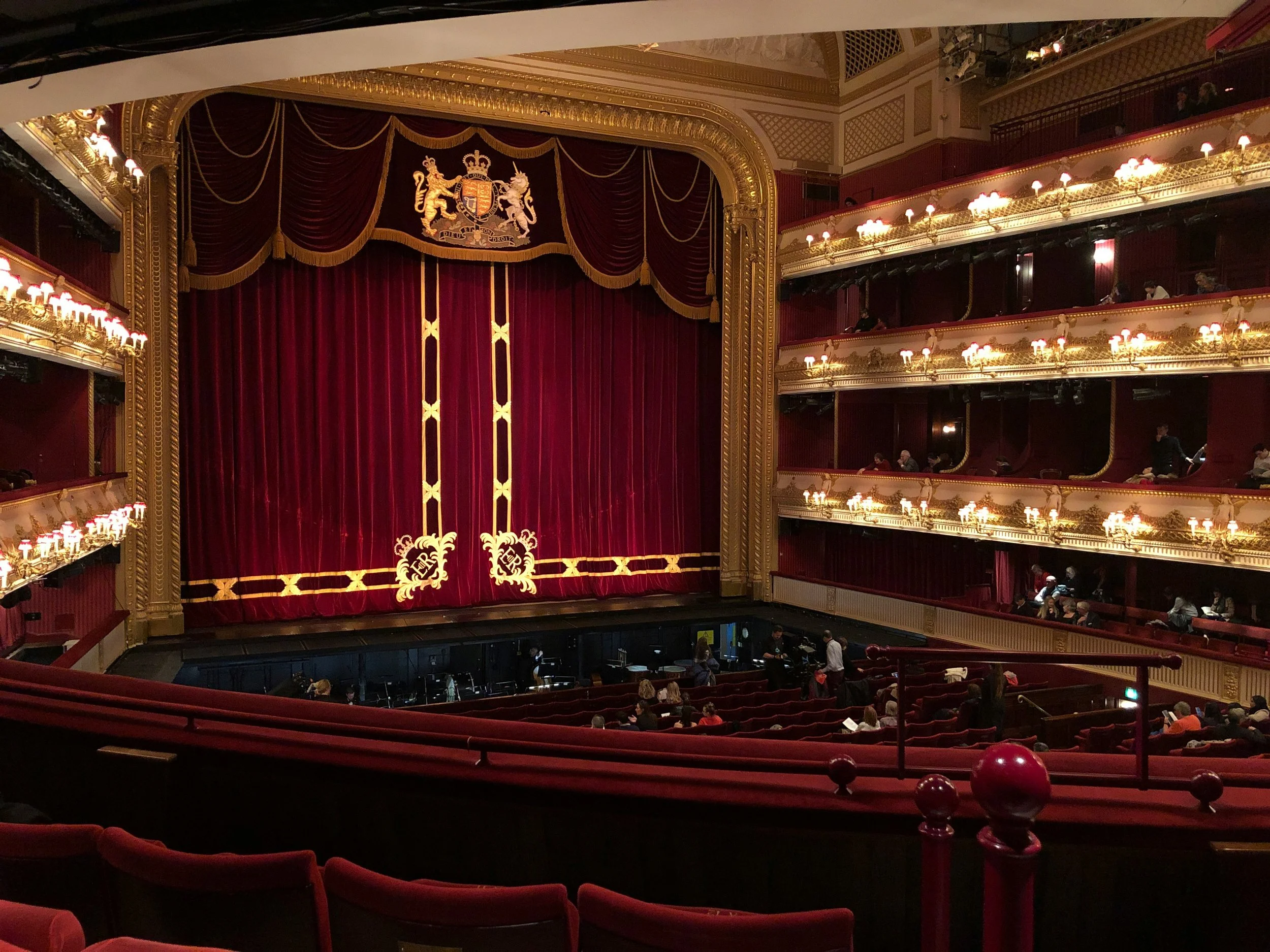
Throughout the five weeks, London itself becomes an extension of our classroom. Students will attend selected professional productions and learn from theatre practitioners working across different aspects of the art form. Alongside our own literary study and rehearsals, students will explore how actors, directors, designers, choreographers, musicians, fight directors, stage managers, and technical teams transform words on a page into a living experience.
Why did an actor interpret a character that way? What did the director choose to emphasize? What can a costume communicate before a character says a word? Why does a character suddenly sing instead of speak? How can posture, movement, scenery, lighting, music—or even silence—completely change our understanding of a scene?
These questions lead students back to the text.
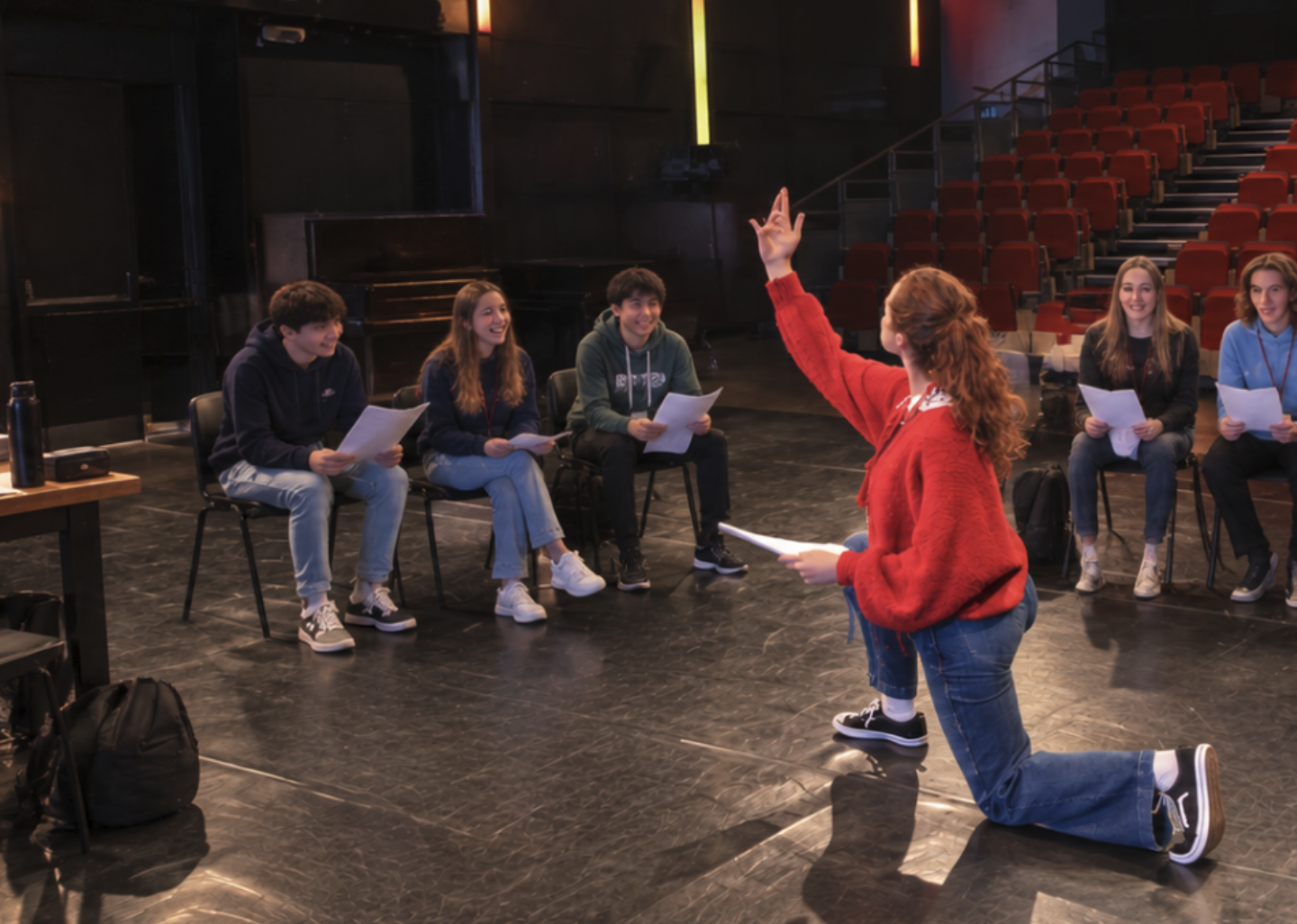
Approximately two days each week will be devoted to our own classroom and rehearsal work: reading closely, discussing and debating interpretations, writing, experimenting with scenes, developing characters, rehearsing, and building toward our final project. On other days, we will step into London’s extraordinary theatre world for professional productions, workshops, backstage experiences, and opportunities to learn directly from people whose work brings stories to the stage.
Hands-on workshops may introduce students to areas such as acting and character development, voice and singing, musical theatre dance and movement, directing, stage combat, set and costume design, lighting and sound, stage management, Shakespearean performance, and other elements of theatrical production. Each offers students another way to investigate literature. What does a costume designer need to understand about a character before designing what they wear? How does a fight director turn conflict written on a page into physical storytelling? What clues does an actor use to understand something a character never says aloud?
Students then bring those ideas back into our own rehearsal room and test them for themselves.
The purpose is not to train young actors. Theatre is our hook—and our laboratory—for understanding sophisticated literature. To perform, direct, design, or stage a scene, students first have to understand it: Who are these characters? What do they want? What are they hiding? Why did the writer create them this way? What does the text tell us directly, what must we infer, and what evidence supports our interpretation?
A shift in posture can become an interpretation. A costume can become an argument about character. A pause can reveal subtext. A lighting choice can change the meaning of an entire scene. Students discover that close reading isn’t simply about finding the “right” answer; it’s about gathering evidence, developing an interpretation, testing it, and making thoughtful choices they can defend.
In other words, Stage Scholars is complex literary analysis in disguise.
Across the five weeks, students move continually between page and stage, analysis and experimentation, audience and creator. The adventure culminates in a final theatrical project in which students use performance, direction, movement, design, music, technical elements, or other theatrical forms to make their own interpretations of literature visible to an audience.
The program runs Monday through Thursday for five weeks in London, April 12–May 13, 2027. Students also receive approximately two hours of small-group math tutorials each week.
-
Character motivation, relationships, conflict, and character arcs
Literary analysis and evidence-based interpretation
Subtext: what characters mean beyond what they actually say
Theme, symbolism, dramatic structure, and authorial choices
Shakespearean language, characters, comedy, tragedy, and dramatic conventions
Modern plays and contemporary approaches to character and storytelling
Musical theatre as literature: how dialogue, music, lyrics, and movement work together to tell a story
Acting and scene interpretation
Voice, singing, and vocal expression
Musical theatre dance, movement, gesture, and physical characterization
Stage combat and physical storytelling
Set design and visual interpretation
Costume design and what clothing communicates about character, setting, and story
Lighting and technical theatre
Stage management and theatrical production
Directing, blocking, and staging choices
Collaboration, ensemble work, communication, and creative problem-solving
Professional theatre analysis and critique
Reflective and analytical writing
Students continually move between text and performance—reading and discussing a playwright’s choices, observing how professional theatre-makers interpret those choices, and then testing their own interpretations through performance and design.
The two age cohorts investigate many of the same essential questions at developmentally appropriate levels. Students aged 9–11 focus on accessible texts and concepts such as character wants, relationships, conflict, mood, storytelling choices, and evidence from the text. Students aged 12–15 dig more deeply into subtext, dramatic structure, symbolism, historical and cultural context, competing interpretations, and sophisticated evidence-based literary analysis.
-
Throughout the five-week adventure, students work toward a culminating theatrical production that brings together the literary, artistic, and technical skills developed throughout the program.
Rather than simply memorizing lines for a play, students approach their performance as literary interpreters. Drawing from Shakespeare, modern drama, and musical theatre, students analyze, rehearse, design, and perform selected scenes that demonstrate different approaches to theatrical storytelling.
Students consider not only what happens in each scene, but why. What does each character want? What is the central conflict? What is happening beneath the words? What choices did the playwright make, and why? How might acting, movement, music, costume, scenery, lighting, and staging communicate an interpretation to an audience?
Students also experience the collaborative nature of theatre by contributing both onstage and behind the scenes. Depending on interests, ages, and production needs, students may contribute through performance, directing, stage management, design, technical elements, music, movement, or other production roles.
Throughout the program, students maintain their signature WorldWise field journals, combining literary notes, character studies, reflections, sketches, design concepts, production observations, written analysis, and documentation of their learning journey.
On the final program day, families will be invited to a Stage Scholars final performance and celebration of learning.
-
Program fee: USD $2,950 per student
A non-refundable enrollment deposit of $650 is included in the total tuition.
Five-week educational program led by WorldWise educators with Junior Teaching Assistant Meda
Monday–Thursday programming for five weeks
Classroom/studio-based literary study, rehearsals, workshops, and field-learning experiences
Developmentally differentiated learning for ages 9–11 and 12–15 where appropriate
Interdisciplinary instruction in literature, writing, theatre, performance, visual design, music, movement, and technical theatre
Approximately two hours of small-group math tutorials each week
Student tickets to WorldWise-organized professional theatre productions in London
WorldWise-organized theatre workshops and learning experiences
Workshops in selected areas such as acting, musical theatre, movement, singing, stage combat, set and costume design, lighting, and stage management
Required student entry fees for organized program excursions
Classroom materials and standard production/project supplies
WorldWise field-journal work
Rehearsals and preparation for the culminating theatrical production
Final Stage Scholars performance and celebration of learning
Ongoing parent communication and program coordination
-
Family accommodations in London
International or domestic travel to and from England
Local family transportation, including airport/train-station transfers and daily travel to program meeting points
Meals and snacks; students bring a packed lunch, snacks, and water each day
Personal clothing and supplies
Travel and medical insurance
Optional family theatre tickets or performances not included in the WorldWise student program
Parent tickets or participation costs for activities where parent attendance may be available
ACCOMMODATION & TRAVEL PLANNING NOTE
Families will need accommodation in London for the five-week program, April 12–May 13, 2027.
WorldWise will provide enrolled families with guidance about recommended neighborhoods and convenient transport connections once our primary classroom, rehearsal, and workshop locations are finalized. We recommend waiting for this guidance before booking accommodation so that families can choose a location with a convenient commute to the program.
FAQs ABOUT THE STAGE SCHOLARS LEARNING ADVENTURE
-
Stage Scholars is designed for curious students aged 9–15 who enjoy stories, characters, reading, writing, theatre, music, visual arts, movement, or creative expression.
Students do not need previous acting, singing, dancing, or theatre experience. This is not an acting camp or performing-arts intensive. It is an interdisciplinary academic learning adventure that uses theatre as an engaging pathway into literature, character analysis, writing, interpretation, and creative thinking.
Students will be divided into age groups of 9–11 and 12–15 for portions of the academic and workshop program so that texts, expectations, and analysis can be appropriately differentiated.
-
Stage Scholars is based entirely in London.
Students will have a regular classroom and rehearsal home base for literary study, discussion, rehearsals, design work, and development of their final project. On other program days, we will use London itself as an extension of our classroom—attending selected professional productions, participating in hands-on workshops with theatre practitioners, visiting theatres and creative spaces, and exploring how different professionals bring literature from page to stage.
Remaining in London for the full program allows students to move continually between studying literature, seeing professional interpretations, learning from theatre-makers, and testing their own ideas in the rehearsal room.
-
Families will need accommodation in London for Week 1–5. Because classroom, rehearsal, and workshop venues are still being finalized, we recommend waiting for WorldWise location guidance before booking non-refundable accommodation. Enrolled families will receive recommended neighborhoods and transportation information as soon as venues are confirmed.
-
WorldWise will provide enrolled families with suggested neighborhoods and guidance about convenient areas to stay in London. Families are responsible for researching, booking, and paying for their own accommodations.
-
The program runs Monday through Thursday for five weeks. Typical days combine classroom/studio learning, rehearsals, workshops, and field experiences.
Since the first week in London, theatre days may occasionally run later than normal program hours depending on the performance schedule. Families will receive a detailed schedule, including theatre dates and adjusted drop-off or pick-up times, before the program begins.
-
In London, students and families should expect to rely primarily on public transportation and walking. Families are responsible for transportation to and from the daily WorldWise meeting location.
-
No. Students should bring a packed lunch, snacks, and sufficient water each day unless families are informed otherwise for a particular excursion or theatre day.
-
English is the primary language, so there is no language barrier for English-speaking students.
-
Absolutely not. Stage Scholars is designed for students with a wide range of experience and interests. Some may love being onstage, while others may be fascinated by writing, literature, music, costume, visual design, technology, or what happens behind the scenes. Performance is one of the tools we use to understand literature—not a prerequisite for participating in the program.
-
Students should be willing to participate actively in the collaborative theatrical process, but Stage Scholars recognizes that theatre involves far more than acting. Students explore both performance and behind-the-scenes roles, including areas such as design, directing, stage management, movement, music, and technical theatre. All students will be expected to contribute meaningfully to the final collaborative production, but meaningful contribution does not necessarily mean playing a leading role onstage.
-
No formal certification is currently included. Students will complete a substantial body of interdisciplinary academic and creative work, including literary analysis, written reflections, field-journal work, character and scene studies, design work, theatre critiques, rehearsals, and contributions to the final production. A program summary or learning documentation can be provided to families upon request.
-
Students will need comfortable clothing and shoes suitable for walking, movement, rehearsals, and England’s changeable spring weather, along with a comfortable daypack, reusable water bottle, and basic classroom supplies. Students may also be asked to bring simple rehearsal clothing or other performance-related items once the final production has been developed. A complete packing and school-supply list will be sent to families before the program begins.
-
Parents may be able to purchase their own tickets and attend selected professional theatre performances in London alongside the WorldWise group when ticket availability allows. Parent tickets are not included in student tuition. Some additional activities may also be open to parents depending on venue capacity and program arrangements. Families will be invited to attend the final Stage Scholars performance and celebration of learning in London.
We have answered the most commonly asked questions about our Learning Adventures. You can take a look at them here.