Where Ireland’s ancient legends inspire tomorrow’s storytellers!
Journey to the myths, music, poetry, animation, and breathtaking landscapes of County Clare as we learn from Ireland’s storytellers, artists, musicians, and filmmakers. Inspired by fairy trees, Celtic ruins, dramatic coastlines, and living oral traditions, students create original poems, graphic novels, stop-motion films, illustrations, songs, and performances while discovering the timeless power of story.
MAGICAL MYTHMAKERS: IRELAND
WITH EDUCATORS
JUNIOR TEACHING ASSISTANT
TUITION:
$3,350 ($650 non-refundable deposit)
AGE GROUP:
• 9–14 years old
PERFECT FOR:
Magical Mythmakers is ideal for curious, imaginative young people who love stories, art, nature, music, and creative expression. Whether they enjoy writing, drawing, performing, filmmaking, or simply asking "what if?", students who delight in exploring ideas and bringing them to life will thrive.
This program is especially well suited for children who enjoy:
Reading fantasy, mythology, and folklore
Drawing, painting, comics, or animation
Creative writing and poetry
Music, drama, or dance
Hiking and exploring beautiful landscapes
History, archaeology, and ancient cultures
Collaborative projects and presenting their work to others
No previous artistic experience is required—just curiosity, creativity, and a willingness to experiment. Throughout the program, students work like real writers, illustrators, filmmakers, musicians, and performers, building a portfolio of original creative work they'll be proud to share long after the adventure ends.

-
For centuries, Ireland's storytellers have transformed rugged coastlines, ancient stone circles, windswept hills, and quiet forests into tales of heroes, fairies, wolves, saints, and sea spirits. During this five-week adventure, students step into that tradition—not simply learning Irish stories, but becoming storytellers themselves.
Each week blends creative studio work two days per week at our classroom location inside The Falls Hotel in Ennistymon with immersive field experiences on Tuesdays and Thursdays throughout County Clare and beyond. Every landscape, conversation, and cultural experience becomes inspiration for original creative work.
Students explore storytelling through many artistic forms. Together we watch and analyze Cartoon Saloon's acclaimed films The Secret of Kells, Song of the Sea, and Wolfwalkers, studying how mythology, music, visual art, and animation combine to create powerful narratives. Students then travel to Kilkenny for a behind-the-scenes visit to Cartoon Saloon, where they meet members of the creative team and learn about the creative process behind these internationally celebrated films.
Ireland's living storytelling traditions come alive through visits with traditional seanchaí (oral storytellers) and musicians who weave stories into song. Students learn several traditional Irish songs, explore the role of music in preserving culture, and perform an Irish jig together during the final showcase.
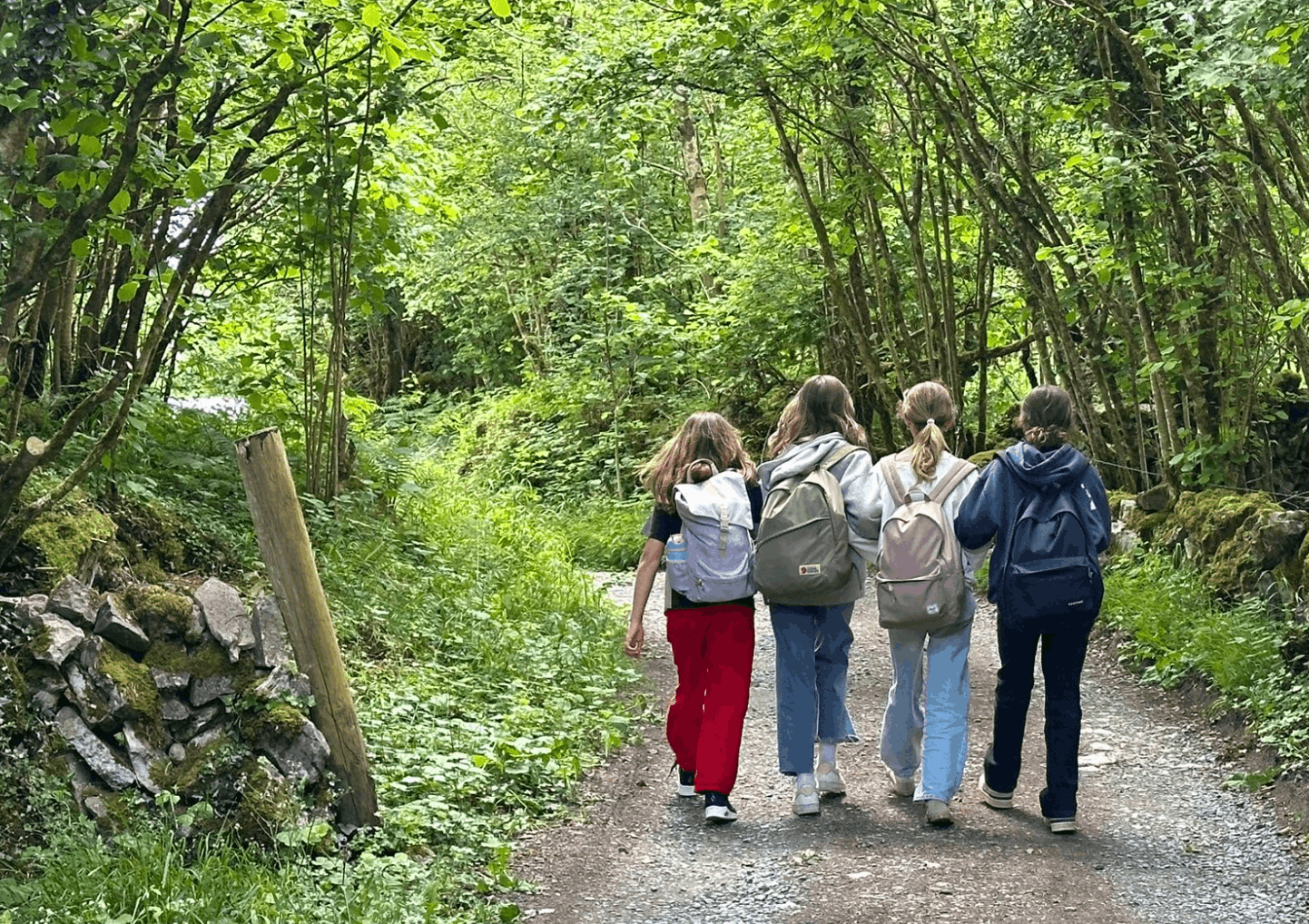
Field adventures take students to fairy trees, sacred wells, Celtic churches, ancient graveyards, caves, stone circles, dramatic Atlantic cliffs, and the remarkable limestone landscapes of the Burren. Along the way they sketch, journal, write, observe, and gather ideas that become the foundation for their own stories.
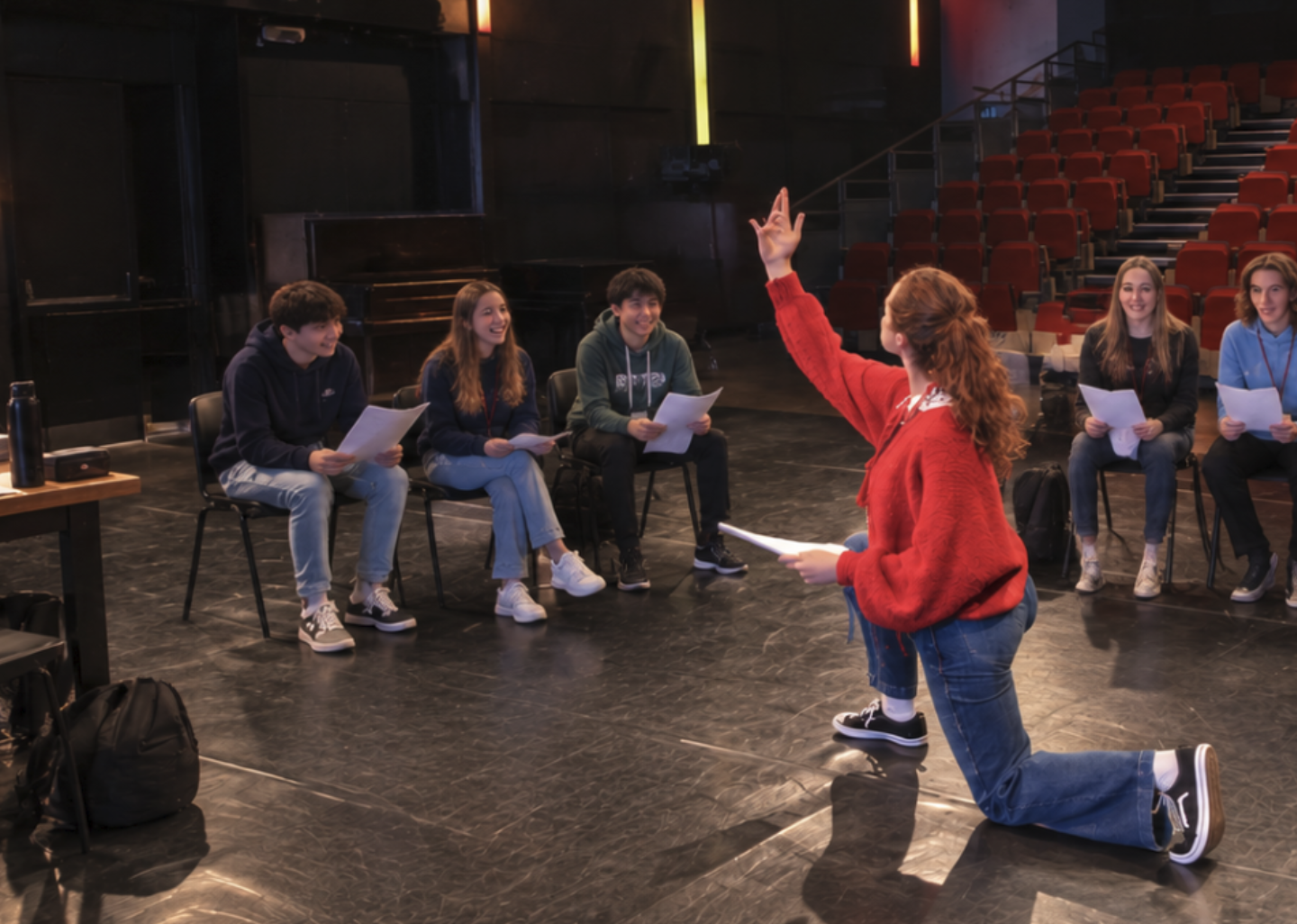
Creative studio sessions give students the opportunity to experiment with multiple artistic mediums as they develop original graphic novels, stop-motion animated films, illustrated stories, watercolor paintings, poetry, and other creative works inspired by Ireland's people, history, and landscapes.
The adventure concludes with our Magical Mythmakers Showcase, where families are invited to celebrate an evening of original storytelling through poetry, music, dance, animation, illustration, and performance as students share the creative projects they have developed throughout the month.
ACADEMIC LEARNING OBJECTIVES
Our interdisciplinary curriculum draws on recognized academic standards, with learning adapted to students’ ages, abilities, and prior knowledge. The objectives below highlight the academic knowledge and skills students will develop throughout Magical Mythmakers, with particular emphasis on creative writing, literary analysis, visual storytelling, and artistic expression.
English Language ArtsCreative Writing, Poetry, Literature & Communication
- Understand narrative structure: Identify and apply essential elements of storytelling, including setting, characterization, conflict, plot development, climax, and resolution. (CCSS RL.5.2; W.5.3)
- Explore storytelling across literary forms: Compare how poems, short stories, graphic novels, and other narrative forms communicate characters, events, emotions, and themes. (CCSS RL.5.5; RL.6.5, supporting connections)
- Analyze narrative poetry: Examine how poets use rhythm, imagery, figurative language, repetition, and poetic structure to communicate stories and evoke emotions. (CCSS RL.5.4; RL.5.5; L.5.5)
- Develop poetry-writing skills: Compose original narrative poems, making purposeful choices about language, imagery, line breaks, rhythm, and poetic form. (CCSS W.5.3; L.5.3, supporting connections)
- Analyze short-story techniques: Investigate how authors develop compelling characters, establish settings, introduce conflict, build suspense, and create satisfying resolutions. (CCSS RL.5.3; RL.5.5)
- Write original short stories: Develop imaginative narratives with clear sequences of events, descriptive details, purposeful dialogue, and coherent conclusions. (CCSS W.5.3; W.6.3)
- Explore visual storytelling: Analyze how graphic novels use illustrations, dialogue, panel sequences, framing, and visual symbolism to communicate narrative meaning. (CCSS RL.5.7, supporting connection)
- Develop descriptive language: Use sensory details, precise vocabulary, figurative language, and imagery to create vivid characters, settings, and atmosphere. (CCSS W.5.3.d; L.5.5)
- Develop a distinctive authorial voice: Experiment with narrative perspective, tone, word choice, and stylistic techniques to communicate ideas and emotions. (CCSS W.5.3; L.5.3)
- Plan, revise, and edit writing: Use drafting, feedback, revision, and editing to strengthen organization, clarity, expression, grammar, punctuation, and spelling. (CCSS W.5.5; L.5.1; L.5.2)
- Analyze oral storytelling techniques: Listen to traditional Irish storytellers and examine how pacing, repetition, descriptive language, vocal expression, gesture, and audience engagement contribute to narrative meaning. (CCSS SL.5.2; SL.5.3; RL.5.4, supporting connection)
- Apply oral storytelling techniques: Incorporate techniques observed in traditional storytelling performances into original poems, stories, and oral presentations, using purposeful language, pacing, and expression to engage an audience. (CCSS W.5.3.b; SL.5.4; SL.6.4)
- Develop oral presentation skills: Present original literary works clearly and expressively, adapting volume, pacing, articulation, and delivery for an audience. (CCSS SL.5.4; SL.6.4)
Visual ArtsIllustration, Celtic Art & Illuminated Manuscripts
- Develop observational and imaginative drawing skills: Use line, shape, proportion, texture, and composition to create detailed illustrations that communicate narrative ideas. (NCAS VA:Cr2.1.5.a)
- Explore painting and illustration techniques: Experiment with drawing, watercolor, ink, and other artistic media to communicate setting, character, mood, and atmosphere. (NCAS VA:Cr2.1.4.a; VA:Cr2.1.5.a)
- Investigate Celtic decorative art: Identify characteristic features of Celtic knotwork and interlacing patterns, examining symmetry, repetition, continuity, and geometric design. (NCAS VA:Re8.1.5.a, supporting connection)
- Create Celtic knot designs: Construct original interlacing patterns, applying principles of symmetry, repetition, line, and spatial organization. (NCAS VA:Cr1.1.5.a; VA:Cr2.1.5.a)
- Explore historical surface patterns: Use gravestone rubbings, where permitted, to observe and record carved Celtic knots and other decorative motifs, examining their visual structure and cultural context. (NCAS VA:Re8.1.5.a; VA:Cn10.1.5.a, supporting connections)
- Understand illuminated manuscript traditions: Investigate how historical manuscript artists combined lettering, decorative patterns, symbolic imagery, and precious materials to communicate and embellish written texts. (NCAS VA:Re8.1.5.a; VA:Cn11.1.5.a, supporting connections)
- Create an illuminated letter: Design and produce a decorated initial using drawing, painting, ink, and gold leaf or metallic foil, applying principles of composition, ornamentation, and craftsmanship. (NCAS VA:Cr2.1.5.a; VA:Cr2.2.5.a)
- Integrate writing and visual art: Create illustrations and decorative elements that complement original poems and stories, strengthening their meaning and visual presentation. (NCAS VA:Cr1.1.5.a; VA:Cr2.1.5.a)
- Refine artistic work: Evaluate and improve compositions through observation, practice, feedback, and attention to technical detail. (NCAS Visual Arts, Creating, Anchor Standard 3, supporting connection)
Media ArtsGraphic Novels, Animation & Visual Storytelling
- Analyze visual narrative techniques: Explain how image sequencing, framing, composition, perspective, and transitions communicate action, time, emotion, and meaning. (NCAS Media Arts, Responding, Anchor Standards 7 and 8)
- Understand graphic novel conventions: Identify how panels, gutters, speech bubbles, captions, and visual pacing influence the reader’s experience of a story. (CCSS RL.5.7, supporting connection; NCAS Media Arts, Responding, Anchor Standard 8)
- Investigate stop-motion animation: Explain how sequential images and small changes in object position create the illusion of continuous movement. (NCAS MA:Pr5.1.5.c, supporting connection)
- Understand the animation production process: Investigate how professional animation studios develop stories through concept development, storyboarding, character design, animation, editing, and final production, drawing on insights shared by animation directors. (NCAS MA:Re7.1.5.a; MA:Re7.1.5.b, supporting connections)
- Analyze professional storytelling decisions: Examine how animation directors use composition, character movement, pacing, visual transitions, and narrative structure to influence an audience’s understanding and emotional experience. (NCAS MA:Re7.1.5.a; MA:Re7.1.5.b; MA:Re8.1.5.a)
- Compare storytelling across media: Analyze how narrative elements can be communicated differently through written literature, graphic novels, stop-motion animation, and feature-length animated films. (CCSS RL.6.7, supporting connection; NCAS MA:Re8.1.5.a)
History & Cultural StudiesIrish Storytelling, Celtic Art & Cultural Heritage
- Investigate Irish oral storytelling traditions: Explore how traditional storytellers preserve and transmit myths, legends, cultural values, and historical memory. Analyze the role of oral storytelling in sustaining cultural identity across generations. (CCSS SL.5.2; RL.5.2, supporting connections)
- Understand the historical role of manuscripts: Examine how illuminated manuscripts were produced and how they preserved and communicated knowledge, literature, and religious traditions. (NCAS Visual Arts, Connecting, Anchor Standard 11)
- Investigate Celtic artistic traditions: Identify recurring visual motifs and decorative conventions, considering their historical and cultural contexts. (NCAS VA:Cn11.1.5.a, supporting connection)
- Compare traditional and contemporary storytelling: Examine similarities and differences between oral storytelling and modern animation, explaining how narrative techniques, audience experiences, and cultural expression change across different media. (CCSS RL.5.7; NCAS MA:Re7.1.5.b; MA:Cn11.1.5.a, supporting connections)
- Explore cultural continuity: Explain how traditional Irish artistic and storytelling practices continue to influence contemporary literature, visual art, music, and performance. (NCAS Arts, Connecting, Anchor Standard 11, supporting connection)
Music & DanceTraditional Irish Song & Dance
- Experience traditional Irish music: Learn and perform a traditional Irish song, developing familiarity with its melody, lyrics, pronunciation, and cultural context. (NCAS Music, Performing and Connecting, supporting connections)
- Understand storytelling through song: Examine how traditional song lyrics communicate narrative, emotion, cultural memory, and shared experiences. (CCSS RL.5.2; RL.5.4, supporting connections)
- Learn traditional Irish dance: Practice the foundational steps, rhythms, coordination, and movement patterns of a traditional Irish dance. (NCAS Dance, Performing, Anchor Standards 4 and 5)
- Develop ensemble performance skills: Practice timing, synchronization, spatial awareness, and cooperation while performing a traditional dance with others. (NCAS Dance, Performing, Anchor Standard 5)
MathematicsIndividualized Mathematics InstructionTwo to three hours per week
- Progress at an individual pace: Develop mathematical understanding, accuracy, and fluency through individualized instruction adapted to each student’s current level, learning needs, and pace. (CCSS Mathematics: Individualized grade-level content standards)
- Strengthen mathematical reasoning: Solve problems, explain strategies, check solutions, and apply mathematical understanding to unfamiliar challenges. (CCSS MP1, MP3)
Students continue working at their own mathematical level rather than following a single grade-level curriculum.
Academic Standards Note
WorldWise curriculum draws on recognized educational frameworks, including the Common Core State Standards (CCSS) and National Core Arts Standards (NCAS).
Learning objectives are adapted to students’ ages, abilities, and prior knowledge. Standards references identify relevant academic expectations and supporting connections rather than guaranteeing mastery of every component of a standard.
-
Throughout the five weeks, students build a portfolio of original creative work inspired by Ireland's landscapes, folklore, history, music, and storytelling traditions. Their final creations reflect not only what they have learned, but also the unique stories they have discovered within themselves.
On the final day, families are invited to the Magical Mythmakers Showcase, a joyful celebration of creativity where students share the projects they have developed throughout the month. Depending on each student's interests and chosen medium, the showcase may include:
Original graphic novels and illustrated storybooks
Stop-motion animated films
Watercolor and colored-pencil artwork
Original poems inspired by Ireland's landscapes and literary traditions
Traditional Irish songs and an Irish jig performance
Creative storytelling presentations
Rather than producing identical projects, each student creates a unique collection of work that reflects their own imagination, artistic voice, and personal journey through Ireland's remarkable storytelling traditions. The showcase celebrates not only finished pieces, but the curiosity, creativity, and confidence students have developed throughout the adventure.

-
Your tuition includes:
Five weeks of WorldWise Learning Adventures programming led by credentialed teachers
All classroom instruction and educational materials
Approximately two hours of individualized math instruction each week
Admission fees for all scheduled educational field trips and experiences
Visits with local storytellers, musicians, artists, and guest experts
Guided visit to Cartoon Saloon in Kilkenny
All project supplies, including materials for visual art, animation, creative writing, and final showcase projects
Final Mythmakers Showcase for families
Parent WhatsApp group with regular updates, photos, and communication throughout the program
-
Families are responsible for arranging and covering the cost of:
Round-trip transportation to and from Ireland
Accommodation for the duration of the program
Daily transportation to and from our classroom venue at The Falls Hotel in Ennistymon
Transportation on field days
Lunches, snacks, and personal expenses
Optional activities outside scheduled WorldWise programming
Travel, medical, and trip cancellation insurance (strongly recommended)
Transportation & Accommodation
Because our field learning experiences take place throughout County Clare, a rental car is strongly recommended and will be necessary for participating in the program. Families are responsible for driving their own children to and from classroom days and accompanying them on field learning days.
Most families choose to stay in Ennistymon, Lahinch, or Liscannor, all of which provide easy access to our classroom venue at The Falls Hotel. Families who don't mind a longer commute may also choose accommodations elsewhere in County Clare.
Most field excursions are located within approximately 30–60 minutes of Ennistymon. Our special visit to Cartoon Saloon in Kilkenny will involve a longer drive of approximately 2.5-3 hours each way. We intentionally schedule this excursion at the beginning or end of the week so that families who wish to extend their visit and enjoy Kilkenny over the weekend have the opportunity to do so.
As always, we'll create a private parent WhatsApp group before the program begins to help families coordinate carpooling, share accommodation recommendations, and connect with one another before arriving in Ireland.
Interested in joining this adventure? Select ‘Enquire Now’ to complete our Family Questionnaire. We’ll review your inquiry and follow up with information about availability and next steps.
FAQs ABOUT THE MAGICAL MYTHMAKERS LEARNING ADVENTURE
-
Imaginative learners aged 9–15 who love stories, myths, art, and music, and who enjoy creative, hands-on exploration.
-
Magical Mythmakers is based in the charming market town of Ennistymon, County Clare, on Ireland's spectacular Wild Atlantic Way. Our classroom days are held every Monday and Wednesday at The Falls Hotel, with students attending from 9:00 or 10:00 AM (depending on math group assignment) until 3:00 PM. Tuesdays and Thursdays are dedicated to field learning adventures and hours may vary.
-
We recommend staying in Ennistymon, Lahinch, or Liscannor, all of which provide convenient access to our classroom venue and many of our field experiences. Families who enjoy scenic drives or prefer a quieter countryside stay are also welcome to book accommodations elsewhere in County Clare.
Because field learning takes place throughout the county, a rental car is essential regardless of where you choose to stay.
-
Details coming soon.
-
Classroom days are held every Monday and Wednesday from 9:00 or 10:00 AM until 3:00 PM at The Falls Hotel in Ennistymon, depending on your child's math group.
Field learning days are held on Tuesdays and Thursdays. These are generally full-day educational excursions, with exact departure and return times varying depending on our destination. Families receive detailed schedules well in advance.
-
A rental car is essential for this program. Families are responsible for transporting their children to classroom days and accompanying them on field learning days.
Most of our educational excursions are located throughout County Clare and involve drives of approximately 30–60 minutes from Ennistymon. Our special visit to Cartoon Saloon in Kilkenny requires a longer drive of approximately 2½-3 hours each way. We’ll intentionally schedule this excursion either toward the beginning or end of the week so families who wish to enjoy Kilkenny over the weekend have the opportunity to do so.
We'll also create a private WhatsApp group before the program begins to help families coordinate carpools whenever possible.
-
Details coming soon.
-
English is the primary language spoken throughout County Clare. Irish (Gaeilge), Ireland's first official language, remains an important part of the country's cultural heritage, and students will encounter Irish words, place names, songs, and traditions throughout the program. While we won't offer formal Irish language lessons, students naturally pick up fascinating vocabulary and gain insight into Ireland's rich linguistic history.
-
Details coming soon.
-
Students should bring their standard WorldWise art kit(pencils, colored pencils or watercolor pencils, portable watercolors, paintbrushes, glue stick, scissors, tape, & a ruler) as well as a reusable water bottle and lunch/snack containers. WorldWise will provide a field journal for every student. We will be doing a few illuminated manuscript miniatures so having a bottle or two of gold and silver paint and/or a gold or silver paint marker would be lovely! Because we'll spend considerable time outdoors exploring Ireland's landscapes, students should also have comfortable walking shoes, a waterproof rain jacket, layers for changing weather, and a small daypack suitable for carrying their supplies during field excursions.
-
Yes! Parents are welcome to join our scheduled field learning days (at their own expense) whenever space and logistics allow. Many families enjoy exploring alongside us. We especially encourage everyone to attend our final Magical Mythmakers Showcase, where students share their original stories, artwork, animation, poetry, music, and performances celebrating all they've created during the month.
We have answered the most commonly asked questions about our Learning Adventures. You can take a look at them here.